6 Ways to Increase Medical Practice Revenue

There are two approaches to improving the financial health of your medical practice. One is to cut costs and the other is to increase revenue. Cutting costs will only get you so far on the road to better financial health. You must generate more income as well. If you aren’t sure where to start, look over these six ways to increase medical practice revenue and see if any of these approaches will work for your practice. You may find one or all of these ways to increase revenue are right for your medical practice.

#1 Nurture the Front Office

Your front office is literally the public face of your practice. You should pay close attention to how your office staff interact with patients. Remember, a happy front office staff translates into happy patients.

Hire personnel with more than just skills, look for those with a heart to serve. Then give them a comfortable working environment, training necessary to do their job well, personal time off, and positive feedback for a job well done. 

Pay close attention to online reviews. Often dissatisfaction with a practice begins with dissatisfaction with the front office. When a positive review mentions a staff member by name, celebrate it! 

Take a look at the waiting rooms as well. Make sure it is a comfortable temperature and that you provide ample relevant and recent reading material. Offer secure wi-fi and post the password so patients aren’t required to ask staff this question. Pay attention to the outside of your building as well. New patients begin to form their opinion about your office before they arrive at the front office. 

#2 Find a Niche and Fill It

Survey the competition and the marketplace and look for niches. Then fill them. One of the best ways to increase medical practice revenue is to offer services when others won’t. 

If your community is populated with providers that offer services Monday through Friday from 8 am to 4 pm, be the practice that’s closed on Thursdays and Fridays and open on Saturday and Sunday. Even if you offer only 1 week-end a month, you can increase your revenue. 

Worried that evening or weekend appointments will affect your own work-life balance? Remember, you don’t have to do this alone. Employ a medical extender such as a physician’s assistant or nurse practitioner to help you extend your hours and your services to increase the revenue in your medical practice. 

If your community lacks concierge medical services, explore the demand. Concierge medical care provides a stable source of revenue, and you can bill on a monthly or quarterly basis. 

#3 Monitor No-shows

If your medical practice is plagued by no-shows it’s time to investigate the reasons. Do your patients have transportation problems? If you know transportation is a problem, then staff should discuss this with the patient when the appointment is made and again when it is confirmed.  Look for solutions. Depending on the state in which you operate, Medicaid may offer a transportation assistance program. 

Are your patients Gen X and Millennials? Replace confirmation phone calls with texts to confirm. Supply a link that lets the patient add the appointment to their iPhone calendar, Outlook, or Google Calendar with just a click. 

And don’t forget to bill for no-show appointments.  Under the current guidelines, you are allowed to bill Medicare patients for no-show appointments provided you treat all no-show appointments the same. In other words, if you’ve been billing patients with private insurance for no-shows, you can now bill Medicare patients when they fail to appear for an appointment. 

#4 Change Collection Practices

Make sure you receive every dollar you earn. Collect co-pays at the time of the visit. 

Make it easy to pay for your services. Instead of setting up a conventional payment plan for your services, partner with a medical financing company such as Carepayment or Care Credit. 

Instead of bearing the costs of these receivables, you transfer them to the financing company. Some companies offer marketing services and patient incentives such as low-interest rates.

When you make financing available, you remove the cost barrier to performing services or procedures. Middle- and lower-income patients don’t have the financial resources to pay for procedures and services, and thus put them off. Or, when it becomes unavoidable, they may be faced with decisions such as paying medical bills or rent or utilities. Unfortunately, medical bills always lose out to housing, heating, or food.

But, by creating a partnership with a medical financing company, you provide patients a path to the treatment they can afford. 

#5 Offer Complementary Services and Products

Another popular way to increase medical practice revenue is to increase the services you offer.

For busy patients that need monitoring, offer telemedicine services. Even audiologists, who traditionally have relied heavily on face-to-face interaction, are practicing tele-audiology, adjusting hearing aids, and performing diagnostic assessments remotely. 

Many patients can benefit from nutrition counseling services in their quest to improve their health through an improved lifestyle. 

You may consider adding medical-grade supplements to your practice. This increases the possibilities of patient compliance, assures you the patients receive high-quality supplementation and improves patient care and outcomes. And you increase revenue. 

#6 A Medical Practice is a Business

You entered your healthcare field out of a desire to help other people. However, healthcare is a business. To be successful you need more than great medical skills, you need to understand marketing, how to control costs, and how to improve the amount of revenue coming into your practice.  Then you can optimize processes for maximum profits. Increasing medical practice revenue is just one part of building a financially healthy practice. 

Chiropractor Revenue Trends Positive Post COVID-19

In 2020, the COVID-19 pandemic caused only a slight dip in chiropractor office revenues industry-wide.  Chiropractor revenue grew steadily from 2012 to 2019. Even though chiropractor services were considered essential in most of the country, economic shutdowns took a toll in 2020 halting the increase.

Chart, bar chart

Description automatically generated
Source

However, chiropractor revenue is expected to grow once more, reaching $15.6 billion by 2024.   The chiropractic field continues to be highly competitive, with over 67,000 chiropractic businesses in the US in 2021. 

Factors Driving The Trend

There are a number of factors driving the overall growth in chiropractor revenue. Many of them can be attributed to changes in attitudes in the medical community and the aging of the US population. 

Since the historic decision in Wilk et al vs the American Medical Association, the medical community has become more open and accepting of chiropractic medicine. Many medical practitioners now recognize that traditional medical treatments for back pain are ineffective. This recognition coupled with the Rand Corporation’s 1992 analysis of spinal manipulation as an effective intervention for lower back pain led to new treatment recommendations by the Agency for Healthcare Research and Quality. Twenty years later, in 2015, the Joint Commission added chiropractic to its pain management standard. 

With the traditional medical community now embracing the benefits of more holistic approaches to treatment and patient well-being, chiropractors began to receive referrals and broader acceptance of their services. 

The American population is aging and that bodes well for chiropractors. The American Chiropractic Association estimates that chiropractors treat approximately 35 million Americans each year. Patients are middle-aged, married, and more likely to be female than male. As the population ages, more Americans are middle-aged and female, so the core demographic is expanding. 

An estimated 5%-10% of senior Americans visit a chiropractor at least once a year seeking relief from pain. Many of these treatments are now covered by Medicare. 

These are all positive trends for chiropractors. However, most practices are still looking for ways to increase revenue. 

How Offices are Increasing Chiropractor Revenue

Increasingly, offices are increasing their revenue with the addition of complementary services and products. Nutrition is a natural part of holistic treatment, so it only makes sense that offices would add diet and nutrition-related services. 

Dietary counseling

Research published in the Journal of Manipulative and Physiological Therapeutics connects a diet-induced proinflammatory state to chronic pain and other degenerative diseases. Nutritional counseling to reduce proinflammatory states as well as address healthy blood pressure levels, blood sugar levels, and weight are natural integrations to the chiropractic office.

A National Institutes of Health-funded study of chiropractors in New York state found that 80% of those surveyed provided nutritional counseling. It’s no wonder chiropractors see the value in diet. Just compare the education of a conventional medical doctor to a chiropractor. The conventional medical school education may contain few if any classes in nutrition, and if offered are provided as elective courses. Most chiropractic colleges incorporate at least 2 nutrition courses in the core curricula. 

Chiropractors are filling the void in dietary counseling. According to the National Board of Chiropractic Examiners, 57% of the chiropractors in the United States co-treat obesity and diabetes. And because they take a whole-patient approach, they include dietary counseling as part of their treatment plan. Additional services create additional revenue.

Nutritional supplements

Most Americans don’t eat a diet that supports optimum health. Because nutrition plays such an integral part in every system of the body, dietary counseling often includes recommendations for nutritional supplementation. 

Adding nutritional supplements to your arsenal of treatments allows you to customize the regime of supplementation exactly to the patient’s needs. When you have access to a broad spectrum of vitamins, minerals, botanicals, and glandulars such as those produced by Nutri-West you can develop a personalized multi-vitamin that’s as individual as the patient’s fingerprint. 

Also, when your office provides the supplements, you are assured of the quality and purity of the product your patients take. 

And as your patient’s nutritional needs change, it’s easy to change the supplementation regime. Additional products create additional revenue streams.

The Future for Chiropractor Revenue is Bright

With greater recognition of the profession and an increased focus on wellness as a health strategy in the US, the future of chiropractic is bright. 

In New York alone, Statista projects chiropractor revenue to be $694 million by 2024. As we move into 2022, there’s every reason to believe revenue trends will continue to be positive.

Healthcare Revenue Cycle Management

Healthcare Revenue Cycle Management

Running a successful business in any healthcare niche requires more than knowledge of your specialty. You need to understand marketing and finance as well. Unique to the healthcare industry is managing the healthcare revenue cycle. Where other businesses rely on straightforward net 30 terms or payment due at time of sale, healthcare-related businesses must deal with a third-party for payment – insurance carriers. To manage your cash flow, you must carefully manage your revenue cycle. Effective healthcare revenue cycle management begins with understanding the cycle, avoiding the pitfalls, and using technology where possible. 

Steps in the Healthcare Revenue Cycle

To manage the cycle, you must understand the components. While revenue technically begins with charge capture, there are steps that must be taken in advance to ensure the cycle is completed. 

Preregistration collects patient and insurance information before the first appointment. Online, secure patient portals speed this process.

Registration collects any additional information needed at the time of appointment and re-verifies that coverage is still in place. This information is also used to meet various regulatory, financial, and clinical requirements.

Charge capture happens when the services you provide are converted into billable charges.

Coding and Claim Submission converts your billable services into the proper universally accepted medical codes for diagnoses and procedures and then submits the claim to the insurance company. 

The Remittance Processing phase is where the insurer either accepts and pays the claim, adjusts and pays a different amount, or rejects the claim. 

After remittance, you enter the Third-Party Follow-Up phase where you bill and collect from the patient for charges not paid by the insurer.

Finally, as part of the Utilization Review phase, you should analyze your clinical treatment data to discover ways to reduce expenses, better use resources, and improve patient outcomes. 

Diagram, venn diagram

Description automatically generated

Image Courtesy TechTarget

Any problem in one phase affects the other phases downstream. For example, failure to code correctly may cause a problem in remittance processing. 

Most Common Challenges in Healthcare Revenue Cycle Management

Every healthcare practice is unique, but most face the same challenges when managing their revenue cycle. The top three challenges are:

  • Sloppy billing
  • Untrained staff
  • Poor claims monitoring

Sloppy billing impacts the cycle at many steps. Failure to keep insurance records current can cause you to miss lapses in coverage, changes in coverage, or changes in co-pay. Incorrect coding or charge capture can cause claims to be rejected. 

Untrained staff may collect data improperly, make mistakes in data entry that lead to coding errors, or fail to communicate your financial policy to patients. Technology can help with sloppy billing, but it requires training. Implementing technology without adequate training doesn’t solve problems, it only adds to existing problems. 

Poor claims monitoring leads to lost revenue. When you don’t follow-up billing for the patient portion of services or clean-up and resubmit claims you are throwing money away. Every time a claim is returned for more information, it just adds to the cost of submitting the claim. It costs an average of $25 to clean up a dirty claim. So, keep an eye on your clean-to-dirty claims ratio. 

The Role of Technology in Healthcare Revenue Cycle Management

Whether you do billing and accounting in-house or outsource these functions, you need to understand the role of medical billing and accounting software in healthcare revenue cycle management. 

These digital solutions can verify insurance coverage, notify you of the appropriate copayments; send claims with specific treatment codes to insurers once services are delivered; and bill for any remaining balances. They track your purchases of medical supplies and maintain your personnel and payroll records.

As healthcare offices undergo digital transformation, they better manage the healthcare revenue cycle, reduce stress on staff, and create a more efficient office. 

For example, take a look at coverage verification. It’s important to verify coverage and know the copayment before the first appointment. By using technology to establish an online portal, you give patients the ability to securely submit their insurance paperwork and self-report their medical history. By the time they first arrive in your office, medical billing software tells you if your services are covered, what payment you will receive from the insurer, and the amount due from the patient. 

Your accounting software can not only manage your inventory but allocate the resources used for each treatment. This leads to better coding and billing. 

Many technology suites help clean up dirty claims and integrate for electronic claims submission. You submit faster and get paid quicker too. 

Maintaining a healthy bottom line for your practice includes monitoring the health of your revenue cycle. 

5 Ideas for Marketing Your Medical Practice

5 Ideas for Marketing Your Medical Practice

Growing a healthcare business takes more than professional training and skill. You need to get the word out about the great work you do. Overwhelmed by all the competing advertising channels and not sure which ones provide the best return on investment? Marketing your medical practice takes a coordinated strategy that uses a multi-channel approach. Here are 5 ways you can increase your brand awareness and find new customers. 

Invest In Your Website

Your website is often the first way people will interact with your practice. Whether they are doing a Google search or scanning social media, most traffic ends up at your website. So, make sure your website represents your philosophy, your personality, and your brand.  When marketing your medical practice, digitally put your best foot forward. You’ll want to project your professionalism, your commitment to patient care, and your values.

Hire a pro

This isn’t the time to try a do-it-yourself approach. Invest in a professionally developed website created by a marketing or digital team with experience working in the healthcare field. Do your research and you will find digital companies that specialize in certain medical specialties. For example, Brand Chiro only works with chiropractors while Audiology Design specializes in hearing healthcare. 

Just as you are an expert in your field, these professionals are experts in creating websites for your medical field. 

Focus on mobile

Make sure your website is completely mobile responsive. According to Hitwise, 60% of all searches are performed on mobile devices. When it comes to health-related searches, the number is even higher. The same report finds 68% of searches in the health category are performed on mobile devices. 

Chart, bar chart

Description automatically generated

Source

Statista research finds that over a third of online consumers use their cell phones daily to find a local business. 

Offer a patient portal 

Invest in secure technology that allows your patients to fill out new patient forms, view their medical records, and make payments online as part of your website. 

The introduction of electronic medical records and electronic health records made patient portals possible. Now patients expect to look for a provider online, make an appointment, and even fill out new patient forms.

This software not only removes friction from the customer experience but also improves communication between you, the healthcare provider, and your patients. 

Patients appreciate the ability to receive and pay bills online and automatic reminders of upcoming appointments. 

You’ll find a patient portal offers back-office efficiency as well as being an important part of your digital marketing strategy. 

Optimize for local SEO

Once your professional website is live, it’s time to begin promoting it. This includes optimization for local SEO. Remember those people searching for a local business each day? You want to make sure your practice shows up in the search results when they include the phrase “near me” or other indicators that tell Google to deliver results for local businesses. 

So, claim your Google My Business listing. You’ll be able to include your address, phone number, office hours, website URL, and a little blurb about your practice. This information is used by search engines to populate maps and create local search engine results pages. 

Also, make sure your listings in all of the local directories are up-to-date. If you find information that is inaccurate, reach out to the publisher and ask that it be corrected. For example, if you find incorrect information on a Yelp listing, claim your business and then make the necessary changes. 

Use On-Line Reviews

Digital reviews are the modern-day word of mouth. And they are essential for marketing your medical practice.  Don’t be shy, ask patients for a review when they visit your office. When patients check out, have staff ask if they were satisfied and then ask for a review. With the patient’s permission, you can send a text or email with links to post reviews to Facebook, Yelp, or Google. 

If you use software such as Podium, to solicit reviews, make sure you have a Business Associate Agreement in place to remain HIPPA compliant. 

When you receive a positive review, thank the patient publicly. If you receive a negative review, express disappointment and encourage the reviewer to connect with your office offline to work towards a solution. 

Marketing Your Medical Practice with E-Mail

One of the most effective ways to market your practice is through email. Create newsletters with tips and information your patients will find helpful. Highlight new research that impacts your practice. Make sure your content provides value and connects with your healthcare niche. For example, ophthalmologists might not only provide tips for protecting the eyes against ultraviolet light but also protecting skin and hair. 

Has the air quality been an issue in your community? Then use email to chime in!

Make sure you obtain patient permission before you begin your email marketing campaigns then decide how often and what format you will use to communicate. You may find that quarterly newsletters and monthly articles work best for your practice.

Don’t be afraid to solicit feedback. When someone opts out of your email, make sure your opt-out page asks why. If it’s the frequency or content that turns your patients off, you need to know. 

Use Medial Social Media Marketing

Social media is a highly effective way to market your medical practice. Each social media channel creates a walled garden within which you can send highly targeted messages.

But if you don’t understand your target it is easy to waste money on social media marketing. Pick your social media channels based on the demographics of your patients. For example, if you generally treat seniors, then use Facebook and not LinkedIn. According to Pew Research, 50% of seniors over the age of 65 use Facebook yet only 11% use LinkedIn. 

Table

Description automatically generated with low confidence

Source

Use Facebook ads to target specific groups. With geofencing, Facebook allows you to target your ads to users in specific locations. 

When it comes to posts, use the 80/20 rule. About 80% of the information you share should be related in general to health and your practice. Only about 20% of your posts should promote your business, provide an offer, or include a call to action.

Participate in Community Fairs and Activities

Community fairs and activities are a great way to get your name out in your service area. Whether it’s the local farmer’s market or the county fair, where potential patients congregate you want to be present.

Scan your local newspapers for upcoming events. Check out the attendance and if it looks like a good fit, then sign up to participate next year. 

Offer an incentive to come into the office, whether it is a discounted treatment or a free evaluation. 

Whether you are marketing your medical practice online or in person, don’t be afraid to test different approaches.

Medical-grade Supplements

Medical-Grade Supplements: Are They Right for Your Practice?

Many naturopaths, chiropractors, medical doctors, ophthalmologists, and other healthcare providers are expanding their practice by offering medical-grade supplements. This is one addition that holds the potential to improve the quality of life for your patients and create a new revenue stream for your practice.

So, is selling supplements right for you? Let’s take a look at the difference between medical-grade supplements and store-bought supplements, how patients and practitioners benefit from the sale of supplements, the ethical considerations, and how to pick a supplement supplier should you decide to proceed. This information will help you decide if medical-grade supplements are a good fit for your practice.

The Difference Between Store-Bought and Medical-Grade Supplements

The nutritional supplements sold at the local grocery store, nutrition center, discount stores, or through a local multi-level marketing associate are not the same as medical-grade supplements. 

Medical-grade supplements are supplements formulated by doctors and are targeted to support overall health or are formulated to the specific needs and conditions of their patients.

Store-bought supplements are formulated and manufactured to sell a product to the general public. The goal is maximizing sales and profit.

On the other hand, medical-grade supplements are formulated and reviewed by numerous doctors. They are intended for use by physicians to offer a higher level of dietary supplementation and are tools for doctors to use in addressing the specific needs of their patients.  

Medical-grade supplements allow a physician to create a personalized multi-vitamin supplement regime to support optimum health and vigor for each patient.

Then there is also a difference in potency. For example, many ophthalmologists recommend “fish oil” as dietary supplement to increase the intake of Omega-3 fatty acids to help alleviate dry eyes. Now, their patient may purchase store-bought fish oil with a front label claim of 1,200 milligrams of fish oil and zero cholesterol. But, the specific dietary ingredients key to supporting good eye health are Eicosapentaenoic Acid (EPA) and Docosahexaenoic Acid (DHA) The back label of this store-bought supplement indicates the supplement provides 363 milligrams and 240 milligrams of these nutrients respectively. The store-bought supplement may contain 1,200 miligrams of fish oil, but only 603 milligrams of the needed supplemental nutrition. 

Now, compare that to a medical-grade supplement like Complete High Potency Omega-3 Liquid from Nutri-West.  The medical-grade supplement provides 880 milligrams of EPA and 420 milligrams of DHA. That’s a total of 1,300 milligrams – more than twice the true potency of the store-bought counterpart. Higher potency means the patient needs to take less of the product to receive a beneficial effect. 

The ophthalmologist that offers the high-quality, medical-grade supplement can instruct the patient to take 1 ½ dose to receive 2,000 milligrams of EPA and DHA, otherwise, the patient is stuck taking 3 or more doses of the store-bought product. So, do you want your patients to take 3 doses of an inferior store-bought supplement or 1 ½ doses of the more potent medical-grade formula? 

Benefits to Patients and Practitioners

Nutri-West goes above and beyond to provide products for specific health conditions for individual patients in addition to supplements to support general health. When a practitioner adds medical-quality supplements to their practice like those from Nutri-West, everyone benefits. 

Benefits to Patients

High-quality, potent supplements provide benefits to the patient and their family. By supporting the immune, respiratory, circulatory, reproductive, endocrine, nervous, and digestive systems you support better overall health. 

Many Americans are interested in leading healthier lives, incorporating healthier habits, and are curious if supplements can help. However, they are reluctant to take them without the recommendation of their educated physician. When you encourage patients to improve their nutrition through supplementation, you are supporting their efforts to improve their quality of life. Patients experience better outcomes when treatment includes the proper nutritional supplementation. 

Medical grade supplements can offer support for specific organs, systems, or even underlying conditions – such as inflammation. This support as part of a holistic treatment plan can not only improve health but improve the patient’s everyday life. 

Benefits to Practitioners

Practitioners always keep the best interest of their patients as their top priority. So, it stands to reason what benefits the patient benefits the practitioner. This maxim holds true for adding medical grade supplements to your practice. 

By ensuring your patients receive complete nutritional support you know you are treating them with all resources you have available to you. And if your patients are going to take supplements, you want to be assured that they are not taking store-bought products with questionable ingredients and dubious results. With medical-grade supplements, you know your patients ingest high-quality ingredients in a product that was manufactured under careful supervision and delivers the potency they need to achieve the results they want. 

You can also expect to benefit from an additional revenue stream as patients take advantage of the ease of purchasing their supplements while in the office. 

Is Selling Supplements Ethical?

The ethics of selling supplements has been hotly debated for years. The American Medical Association’s position on selling supplements is the same position that it holds on selling any other health-related products. The physician should only offer products that are backed by scientific reviews when it comes to efficacy. They should also avoid conflicts of interest.

No ethical practitioner will offer a supplement just to make a buck. You and your colleagues wouldn’t do that.

What is ethical is to uphold your Hippocratic Oath and do no harm. Since you can’t control the quality or potency of store-bought supplements, you should steer clear of them and only recommend supplements developed by physicians for physicians. 

In addition, you’ll want to check with your state licensing board. The regulations vary from state to state and from practice. For example, Massachusetts previously barred the sale of supplements by medical practitioners, but since 2016, the law recognizes the need for naturopathic doctors and those working in a naturopathic health system to offer nutritional supplements. So, it is now allowed.

Picking a Medical-Grade Supplement Supplier

Once you’ve decided that supplementing your practice with supplements makes sense, you’ll want to search carefully for a reliable supplier. 

Choose your supplier as carefully as you would a partner. That’s because this supplier will be a partner in the healthcare you offer to your patients. 

Make sure they only offer medical-grade supplements. Also, the products should be manufactured in the United States, so they meet the highest quality standards for supplements. 

A reputable supplier, like Nutri-West, will have input from many physicians and health care professionals that formulate, research, and approve products. They will also be dedicated to supporting your continuing education on nutritional supplementation through workshops and seminars. 

That’s the level of support and the assurance of quality you want from your supplier of medical-grade supplements.

How to Grow a Medical Practice

How to Grow a Medical Practice

Your years of intense schooling and hands-on training have well prepared you to be a physician or other type of healthcare provider. But while you may have intimate knowledge of human anatomy, how well do you know the anatomy of a successful business?

You’re trained to be a healer – not a business owner. But if you want to grow a medical practice, you’ve got to think like an entrepreneur. That means offering a unique selling proposition, adding value to your services, and operating in a customer-centric fashion. 

Does that sound more like something out of the Harvard Business Review than the Harvard School of Medicine? Let’s dissect it.  

Hire the Right People

Your office staff is crucial to your success. Hire wisely. Remember that all patient-facing personnel must be friendly, compassionate, and caring. And they must like people!

Patients want to establish a relationship with your office and your staff is the people they may interact with the most. Make sure they are as competent in their people skills as they are in their professional skills. 

How do you avoid difficult or toxic staff? Interview carefully.

You are looking for a person that has the heart to serve others. You’ll notice this because they refer to teamwork and team accomplishments instead of just using the word “I”. Use the interview time to delve into what they feel are difficult situations and most importantly why they find them difficult or uncomfortable. 

Ask about their best moments at work. If the answer refers to office parties or perks, this is the type of superficial person you want to avoid. Positive people always start from a position of “yes” and must be moved to “no”. You want to hire positive people. 

Become a Resource for Information

Establish your practice as a repository of information to help people lead healthier lives. Your practice should be more than a center for healthcare, it should be a center for better health in the community. 

You can do this by keeping health-focused pamphlets and literature throughout the waiting area and treatment rooms. Make sure the information you provide is current. This literature can cover topics that range from how to sleep better at night to avoiding dry skin in the winter. Your patients will use this information and share it with others. 

Participate in local fairs and events and offer to provide free screenings.  If your community doesn’t hold health fairs, become the practitioner that organizes one. Distribute literature that addresses a common concern about health in the community. 

Use your specialized knowledge to support journalists. Journalists are always seeking insights and quotes on medicine in the news.  Offer your knowledge through Help A Reporter Out. HARO connects reporters from newspapers, televisions, and internet media with those that have expertise in certain fields. In addition, cultivate relationships with your local and community newspapers. When they write on a health-related topic, you should be their first choice for a comment. And local papers in particular usually struggle to fill their pages with content. Submit editorials and articles about healthy lifestyles or particular medical issues you see in the community and you along with everyone else in the area will see your name in print. 

Make Use of Technology

You make full use of technology in diagnosing and treating patients, so make full use of technology in your practice. 

Explore apps to help patients manage chronic conditions such as asthma or diabetes. Patients with problems relaxing, sleeping, or catching their breath appreciate apps like Breath Ball, while diabetics can improve treatment outcomes with apps that remind them when to test and when to take medication. 

Stay current with apps and recommend the ones you feel have the most value. Your patients will share the app with their friends and tell them they heard about the app from you.

Make sure your website (and you must have a website) allows patients to schedule their appointments online. A study by Stax found that 80% of people preferred to book medical appointments online yet 85% of them had to make appointments by phone. That’s a big disappointment to the patient. The gap between the demand for online scheduling and supply represents an underserved market.  And if you are looking to build a medical practice, it’s important to know that if given a choice between physicians with similar experience, location, availability, and review ratings, consumers opt for the provider that offers online scheduling.  

Younger, wealthier, and more educated patients not only prefer online appointment scheduling but also look for providers with patient portals. These allow patients to access lab results, medications, immunization records, allergies, and discharge summaries. 

Create a Patient-Centric Environment

Look at your practice through the eyes of your patient. Stand outside your front door, close your eyes, take a deep breath, open the door and your eyes.

What do you see? This is what your patients see when they open the door. Make sure your waiting area is comfortable and free of stressors, including loud sounds or bright lights. 

What is the check-in process? Are new patient forms available online or must new patients juggle a clipboard on their lap to collect data? Can patients check in on their cell phones?

What is the experience like in the patient treatment rooms? Is the environment comfortable?

Don’t be afraid to ask for feedback. Send patient surveys by email and text. The Net Promoter Score asks about the likelihood of referring your practice to someone else and responses are rated on a scale from 1 to 10. 

Patient feedback tells you how you are doing and recommends areas for improvement. Paying close attention to market demands is how you grow your medical practice. Patients that are happy with the service you provide will tell friends, family, and co-workers. 

Expand Your Offerings

Look around for ways to expand your offerings or services.

Offer medical-grade supplements. A recent study shows 60% of Americans want to feel healthier and supplements will help them achieve their health goals. 

In addition to adding a revenue stream, you’ll find high-quality supplements such as those from Nutri-West can improve care outcomes and increase the quality of life.

Look to the community needs and then offer a service to fill the need. For example, if you serve a senior population, reach out to home healthcare providers. A partnership may be profitable for both of you. Aging populations require audiological services so combining ENT and hearing aid services is another way to branch out. Physical therapists may partner with other professionals to offer massage services or fitness training. 

When it comes to building your medical practice, you’ve got to see things through the eyes of the patient and think with the mind of an entrepreneur. 

Healthcare Revenue Strategies

Healthcare Revenue Strategies to Grow Your Practice

According to research and consulting giant PwC, during the 2020 pandemic  “many healthcare organizations saw their financial plans obliterated, patient behaviors radically shifted, and virtual care exploded.” In their Report on Major Issues Facing Healthcare, they make it clear that 2021 is the year that healthcare practitioners will put the pathway to treatment pieces back together and start rebuilding their practices.

If 2021 has you looking for ways to grow, explore these healthcare revenue strategies to grow your practice and your revenue.

Streamline Billing Practices

Nothing kills revenue like submitting a claim and failing to be paid. If you commit to paying close attention to accuracy, you will limit denials and increase the number of times you are paid on the first pass. And if a claim is denied, clean it up and submit it again.

Clean claims, submitted on a timely basis, with thorough documentation and bereft of errors, are central to maintaining a healthy revenue cycle. When claims are incomplete, incorrect, or unintelligible, your claims will be delayed or denied. 

Simply double-check common claim errors, such as: 

  • Date and location of service
  • Health care provider
  • Codes and modifiers
  • Prior authorization information

And if a claim is denied, clean it up and submit it again. A Medical Group Management Association study found that it only costs about $25 to rework a denied claim, and over half of the denied claims are never reworked. You could be leaving money on the table when you fail to clean and resubmit a claim.

Maximize Patient Lifetime Value

Healthcare providers enter the field for altruistic reasons. But, in order to be successful, you must remember to operate as a business. And every successful business knows the importance of the customer lifetime value. Medicine is no different.

Whether you measure patient lifetime value (LTV) in terms of profit or revenue, you need to measure this important metric, then act to maximize the value.

The simplest lifetime value calculation is:

Apply data-driven marketing techniques to maximize the lifetime value of a patient. Segment your patient database by chronic conditions such as diabetes, asthma, high blood pressure, or others that require frequent monitoring. Flag these patients to schedule each follow-up visit while still in the office. Communicate the importance of all follow-up visits.

In addition to chronic conditions, segment your patient database to include student-athletes who require physical exams before participation, schoolchildren who need immunizations or check-ups, and senior patients for flu, pneumonia, or shingles vaccinations. 

Enhance Offerings

Create new revenue streams by offering complementary products. Offer high-quality nutritional supplements like those made by Nutri-West.

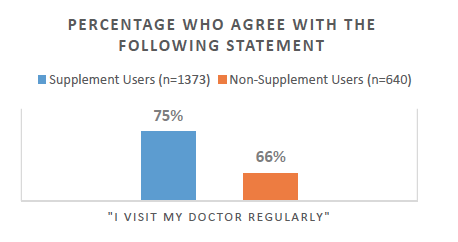
Research by the Council for Responsible Nutrition (CRN) shows that patients trust their healthcare providers to provide reliable information about supplements. What’s more, patients that take supplements are more likely to schedule regular visits.

Nutritional supplements are a way to make a positive impact on your revenue by creating a new sales channel and make a positive impact on the health and quality of life of your patients. 

As part of your supplement offering, you may also offer a nutritional analysis, guided weight loss, or detox or cleansing protocols. Chiropractors may offer postural analysis and physical therapists may add massage services. Look to see what products and services naturally support your core offering and use these enhanced offerings to create your unique selling proposition.

Rethink Office Hours

Your patients are modern consumers, and they are used to flexibility in all areas of their life. Providers who offer flexible office hours can increase revenue considerably. Extend your normal hours and offer early or late hours one or 2 days a week. This appeals to people who would like to schedule a visit before or after their own workday.

Offer Saturday appointments one or two Saturdays a month or open from 9 to noon or 1:00 every Saturday. Rotate office staff and practitioners to keep everyone fresh. One physician in Alabama reports that by opening on a Saturday morning for brief office visits (no lengthy procedures) he can see 20 patients over a 3 hour period and in just 11 months generated enough revenue to pay off his start-up debt. When you make it easy to get an appointment that works for the patient you make it easier to increase revenue.

Reduce No-Shows

You’ll never completely eliminate no-shows. After all, as a healthcare professional, you know better than most how life has a way of getting in the way of plans. But you can take steps to reduce no-shows and thus increase your revenue.

Start by asking patients how they want to be contacted and then honor their request. Often, patients prefer text messaging to phone calls for reminders. Either way, put technology to use and employ automated systems to send texts or phone calls to remind patients of upcoming appointments. 

Have staff follow up on no-shows and find out the reason. If you have patients that routinely no show, they may face transportation barriers. Some Medicare Advantage plans cover the costs for routine transportation to a doctor’s office and Veyo partners with many insurers to provide transportation.  

When you remove friction, you reduce revenue by killing no-shows.

Ask for Reviews

Patient reviews are an integral part of reputation management. With more and more patients using digital resources to find new healthcare providers, reviews also play an important part in provider selection.

Don’t be shy about asking for reviews. At the end of the appointment, take a moment to informally inquire about patient satisfaction with the service. “Was it easy to schedule your appointment?” Or “Have I covered all your concerns” are great questions to determine how a patient feels about your practice. If the answer is not affirmative, you are in the best position to immediately address the problem.

Any praise should be used by the office staff as a prompt to ask for a review. And when you ask for a review, let them know where you would like the review placed. You can even email a follow-up with a link to place the review.

For example, if you are concentrating your efforts on local Google search results, ask patients to place their reviews on Google. 

And remember, people are used to writing reviews. They rely on them to make their own purchasing decisions and are accustomed to reviewing everything from a hamburger to a hairdresser, so reviewing their healthcare provider is no different. 

Those reviews translate into more clicks online and convert into new patients, growing your revenue.

Adopt Patient Self-Scheduling Technology

According to Gartner, around 75% of patients rank the ability to book and modify appointments online as important when selecting a healthcare provider.

Millennials in particular are digital natives that prefer to self-serve as much as possible. That includes booking appointments for healthcare.

Self-scheduling also allows the busy person to book their appointment even when your office is closed. And offering the ability to self-schedule may be the difference between converting a new visitor to your website into a new patient or a visitor that leaves to explore more digital-friendly options.

Self-scheduling improves your revenue by reducing no-shows. And because it improves the customer experience (a key differentiator in the modern market) your patients are more likely to recommend your practice to their family and friends.